A daily staple.
In the Amazon, açaí belongs at the everyday table. Pulp may be eaten with cassava flour, alongside fish, prawns or other savoury food. A sweet breakfast bowl is one way of enjoying it. [3]
THE JOURNEY OF AÇAÍ
Before the toppings. Before the purple box.
A palm, a river, and generations of knowledge.
Come with us to the Amazon. Meet the people behind the harvest, follow the fruit across the world, and get to know what’s really in your spoon.
Start at the roots Or settle in for a film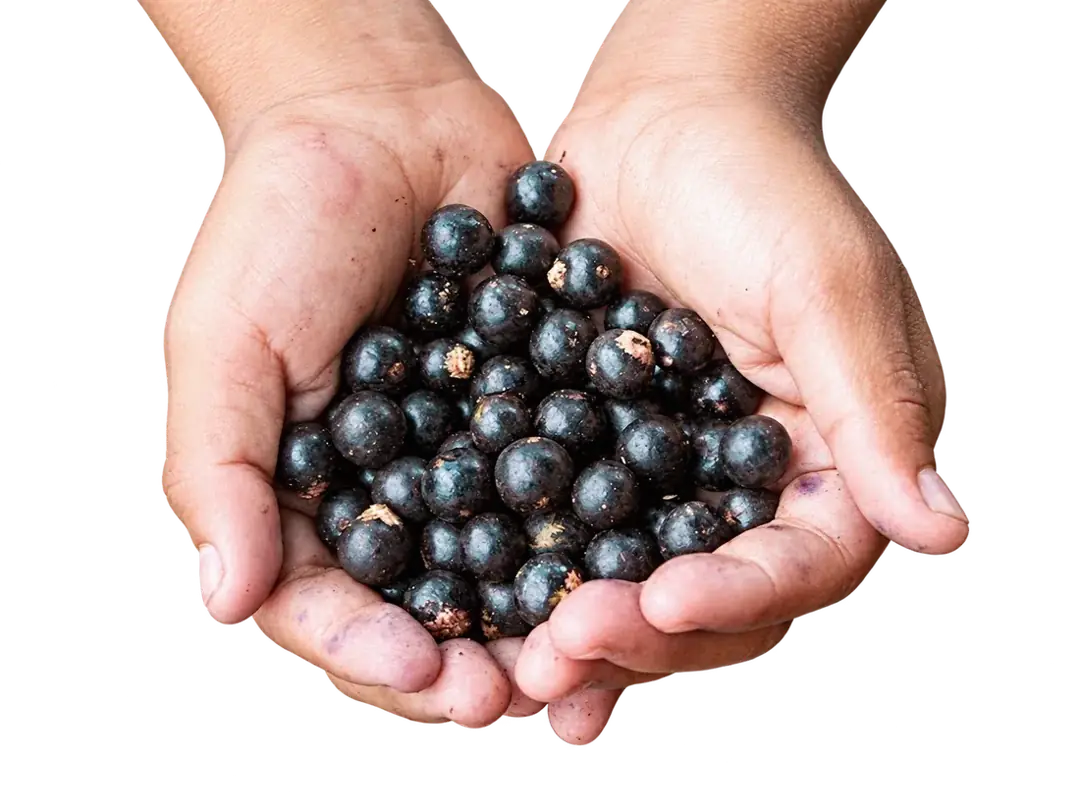
01 / LONG BEFORE THE BOWL
Açaí’s story starts with the people of the Amazon. The world’s appetite for it came much later.
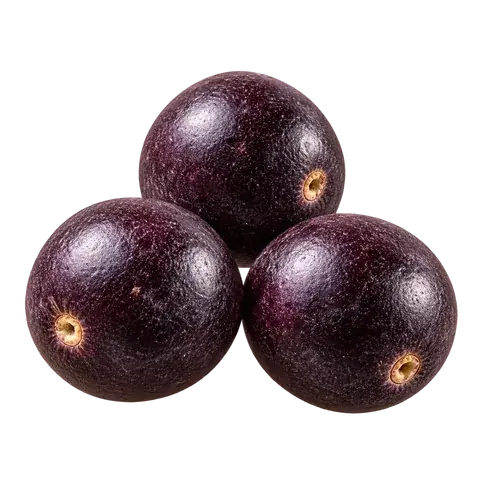
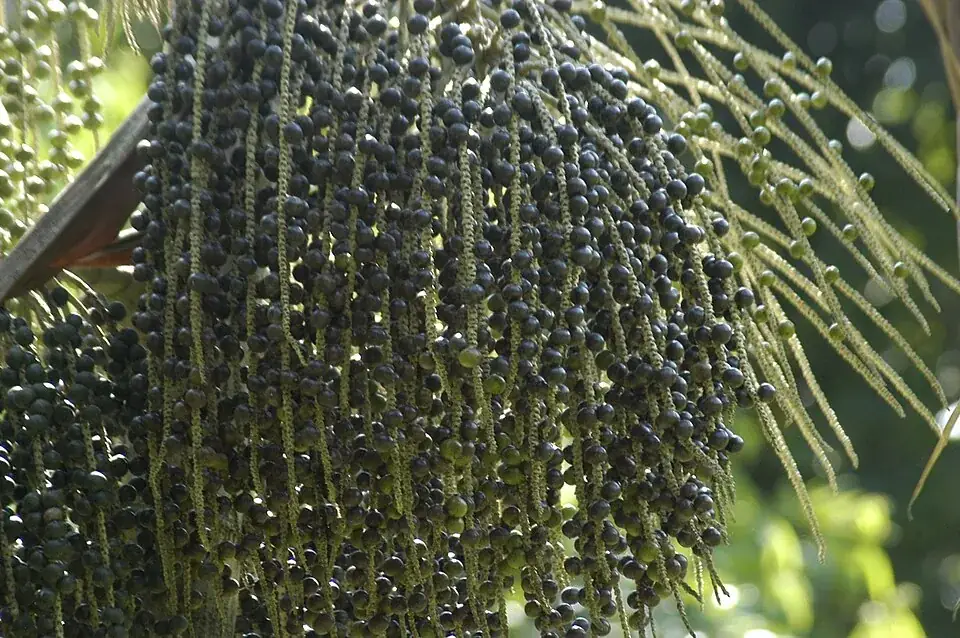
The dark-purple fruit grows on a palm native to tropical Central and South America, widely found in the Brazilian Amazon. It has long been an important food for Indigenous peoples there. [1]
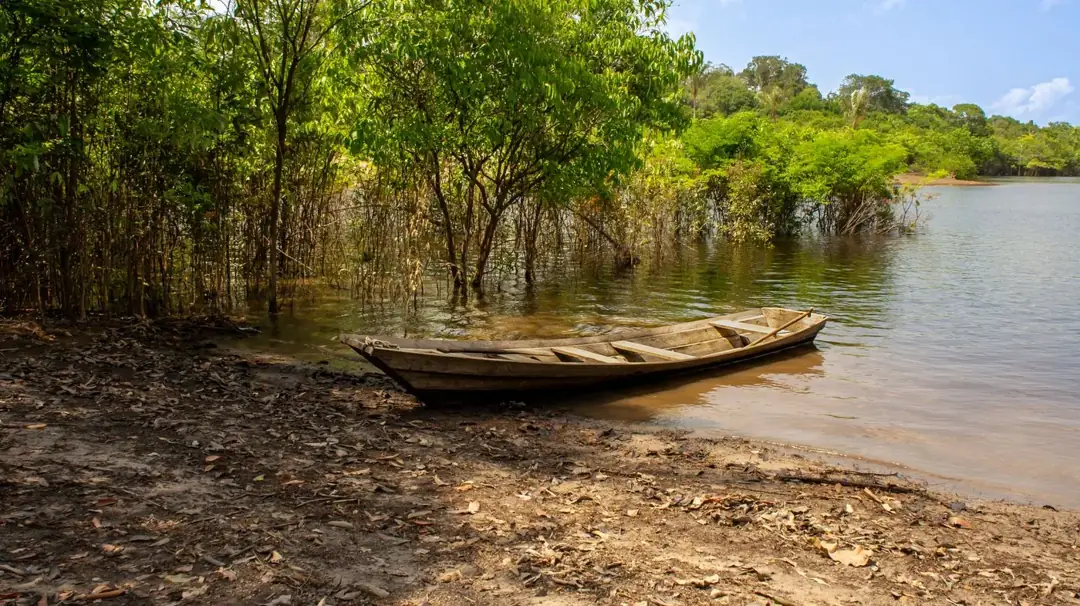
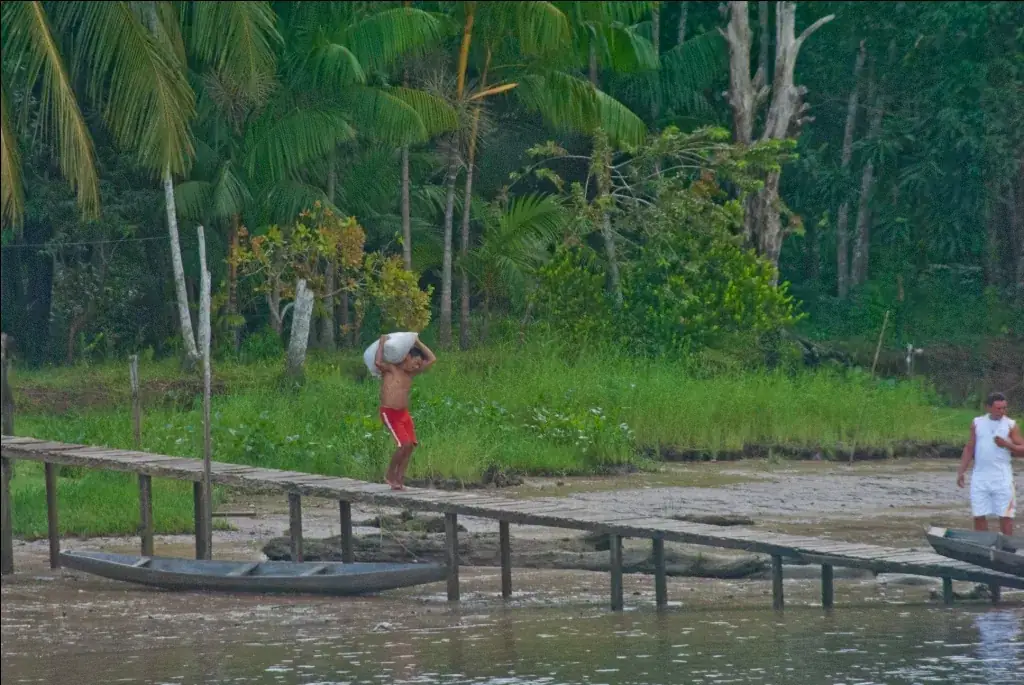
Today, river communities continue to pass down the skills of growing, gathering and preparing it. In Cametá, Pará, the voices in IPAM’s film describe açaí as food, livelihood and identity. [2]
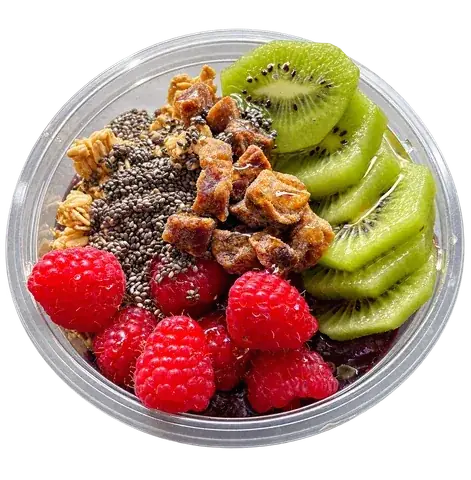
In the Amazon, açaí belongs at the everyday table. Pulp may be eaten with cassava flour, alongside fish, prawns or other savoury food. A sweet breakfast bowl is one way of enjoying it. [3]
Research traces the growth of the regional açaí economy to rural families moving into Amazonian cities. Local knowledge, tastes and trading networks helped shape the market. [3]
Demand grew beyond the region, with sweeter ways of serving açaí reaching new consumers. Local and global supply chains developed alongside each other. [3]
The international bowl is now part of the story. So are the communities, food traditions and landscapes that made it possible. Their voices deserve a place at the table. [2]
Same fruit. Different tables.
There’s a whole world beyond the granola.
02 / THE HANDS BEHIND THE HARVEST
 FOREST / FRUIT / PEOPLE
Life moves
with the river.
Harvesters climb slender trunks to gather fruit bunches. Business Insider’s True Cost report examines the skill, danger and economics of this work. [4]
Demand doesn’t guarantee fair pay, safe work or biodiversity. The same report examines child labour and pressure to favour açaí over other plants. [4]
The useful questions: Who grew it? Who picked it? What can the supplier trace?
Watch the reporting03 / FROM PALM TO SPOON
How does a berry from the Amazon reach a bowl on the other side of the world? Follow the frozen-pulp route.
THE PULP / PROCESSING
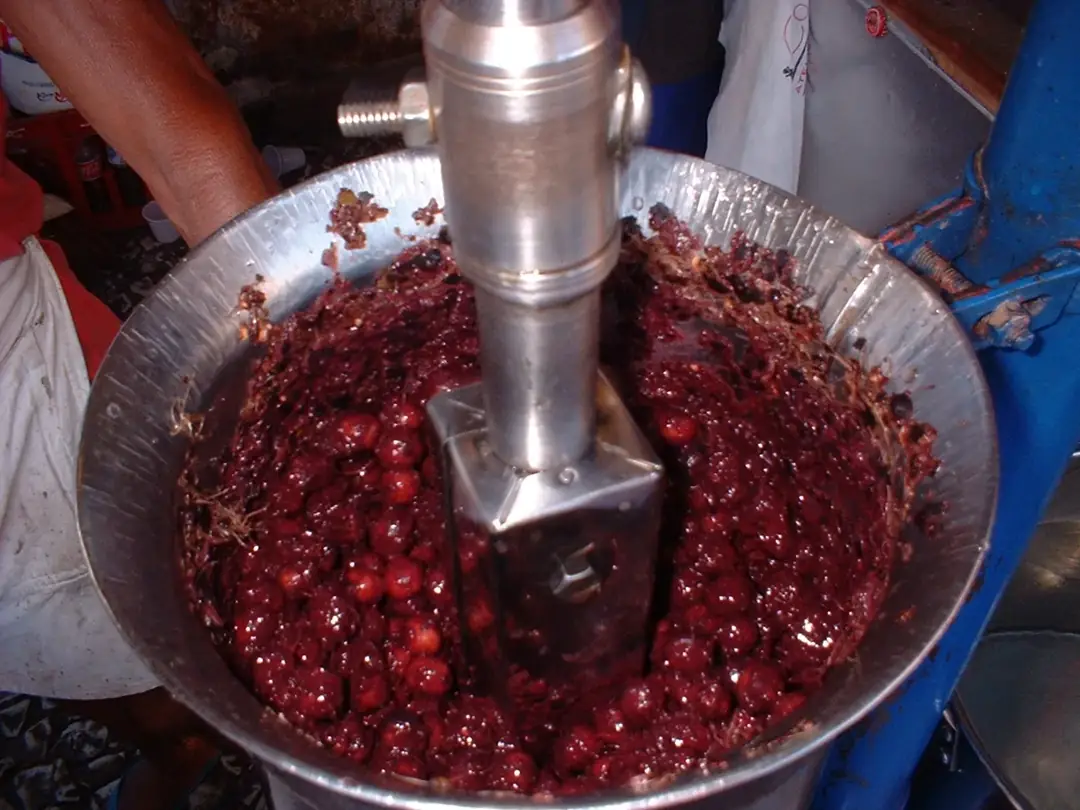
Nossa! describes sorting, cleaning and softening the berries, then separating pulp from seed with added water. The pulp is refined, pasteurised and frozen. [5]
Freezing preserves a perishable food for the next leg. Pasteurisation and freezing do different jobs; a cold product still needs careful food-safety controls.
THE CROSSING / EXPORT
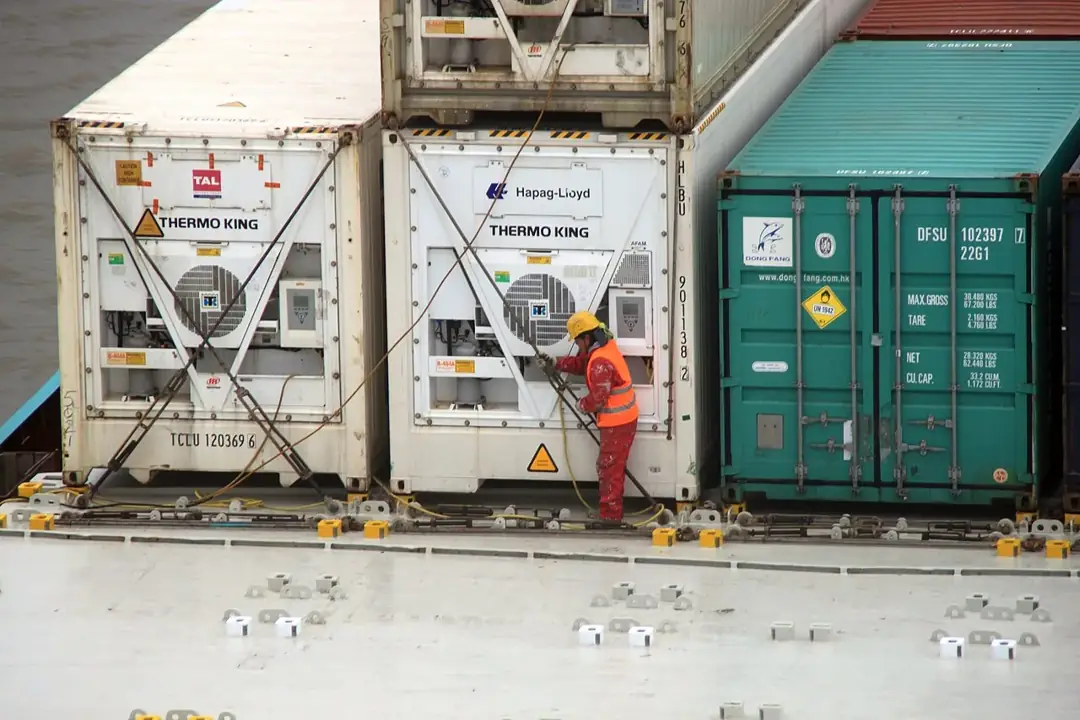
Frozen pulp can travel in refrigerated sea containers. Nossa! describes monitored sea shipments from the Amazon to Europe; exporter Açaí Tropicália Mix also describes smaller air shipments kept frozen with dry ice. Routes depend on the supplier and product. [5] [6]
It’s generally processed pulp making this trip, rather than a box of fresh berries. These are documented examples, not a confirmed route for our own açaí.
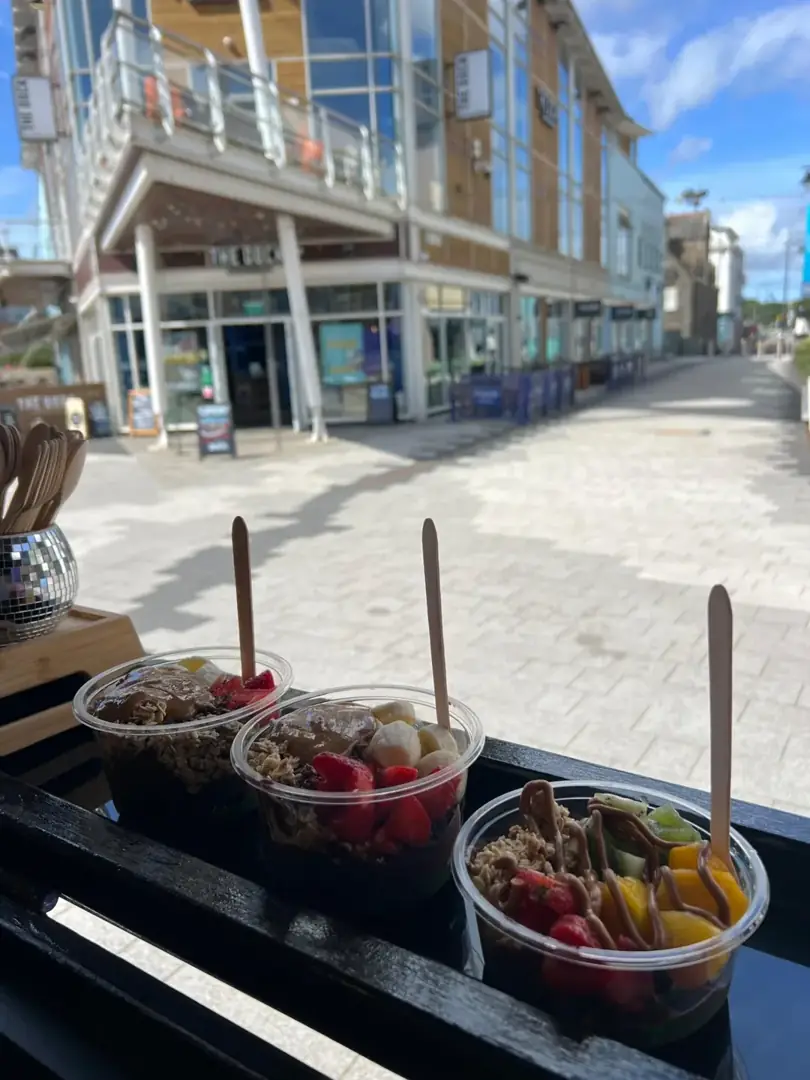
THE BOWL / YOUR SPOON
Frozen packs and ready-to-scoop blends are two formats used by cafés and bowl bars. Recipes differ: check whether a base contains added sugar, other fruit or additional ingredients. [7]
At our bar, you’ll meet combinations like The OG, More Power and More Passion. The base and toppings together make the finished bowl.
Find your favourite spoonfulA guide to the wider açaí trade. These photographs show stages of the wider trade, not The Açaí Bar’s supplier route. We haven’t published a verified farm, processor or shipping route for our own product yet.
Photographs framed to fit. Source photographs and licences are linked in each credit.
04 / A LITTLE PURPLE GOODNESS
Açaí brings more than a beautiful colour to the bowl. Meet the natural plant compounds, fats and delicious possibilities behind our favourite purple fruit.
PLANT COMPOUNDS
Açaí contains anthocyanins and other polyphenols: naturally occurring plant compounds studied for their antioxidant activity. That rich purple colour is part of the berry’s appeal, inside and out. [8]
NATURALLY PURPLE
NATURALLY OCCURRING FATS
Açaí pulp and skin contain naturally occurring fats, including oleic acid — a monounsaturated fatty acid. There’s plenty to discover in this little fruit before the toppings even arrive. [8]
GET TO KNOW THE FRUIT
THE WHOLE BOWL
Fruit, oats, nuts and seeds are delicious ways to bring fibre and variety to your diet. Pair your açaí with fresh fruit, granola and a little crunch, and make every spoonful your own. [9]
COLOUR. CRUNCH. VARIETY.
WHY WE KEEP COMING BACK
Cold, creamy açaí. Bright, juicy fruit. Golden granola and your favourite drizzle. It’s the combination that makes a bowl worth slowing down for.
Start with The OG, go tropical with More Passion, or find your own mix at the counter.
Meet your next favourite bowl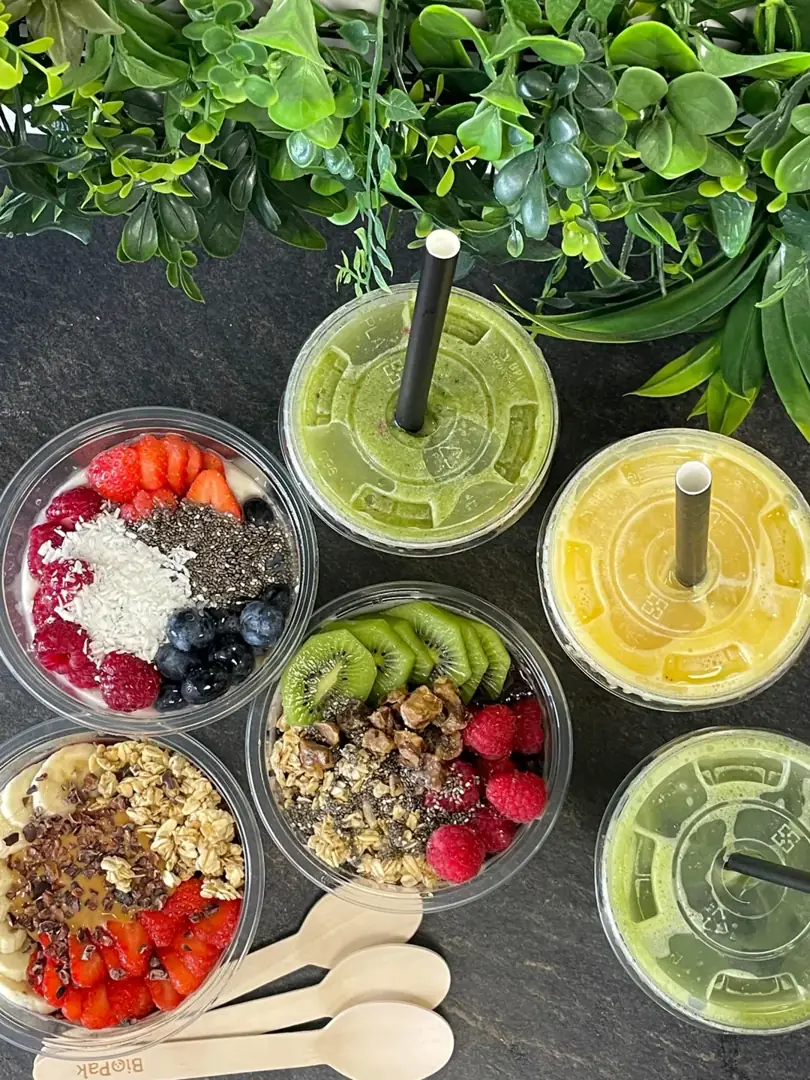
Deep roots.
Fresh toppings.
Very good mornings.
There’s a lot to celebrate: anthocyanins and other plant compounds, naturally occurring unsaturated fats, and a fruit that pairs beautifully with so many other foods. These are the qualities we love sharing in our bowls, as part of a varied diet. [8] [9]
Take your pick from our signature recipes, or start with an açaí or yoghurt base and choose your toppings and drizzle. Fresh fruit, granola, coconut, chia and more are waiting on the full menu .
Açaí is a delicate, perishable fruit. Processing and freezing the pulp near the harvest lets it travel, kept cold, ready for that chilled spoonful you know and love. [5]
Our sources below include research into açaí’s composition and human studies. Those studies explore the fruit and particular preparations; our finished bowls each have their own mix of ingredients and portions. Ask the team about ingredients and allergens before ordering.
05 / MAKE A LITTLE TIME FOR THE STORY
Three perspectives worth sitting with: community voices, independent reporting, and a film made with local growers.
Settle in with the filmmakers. Choose a film to open its original player.
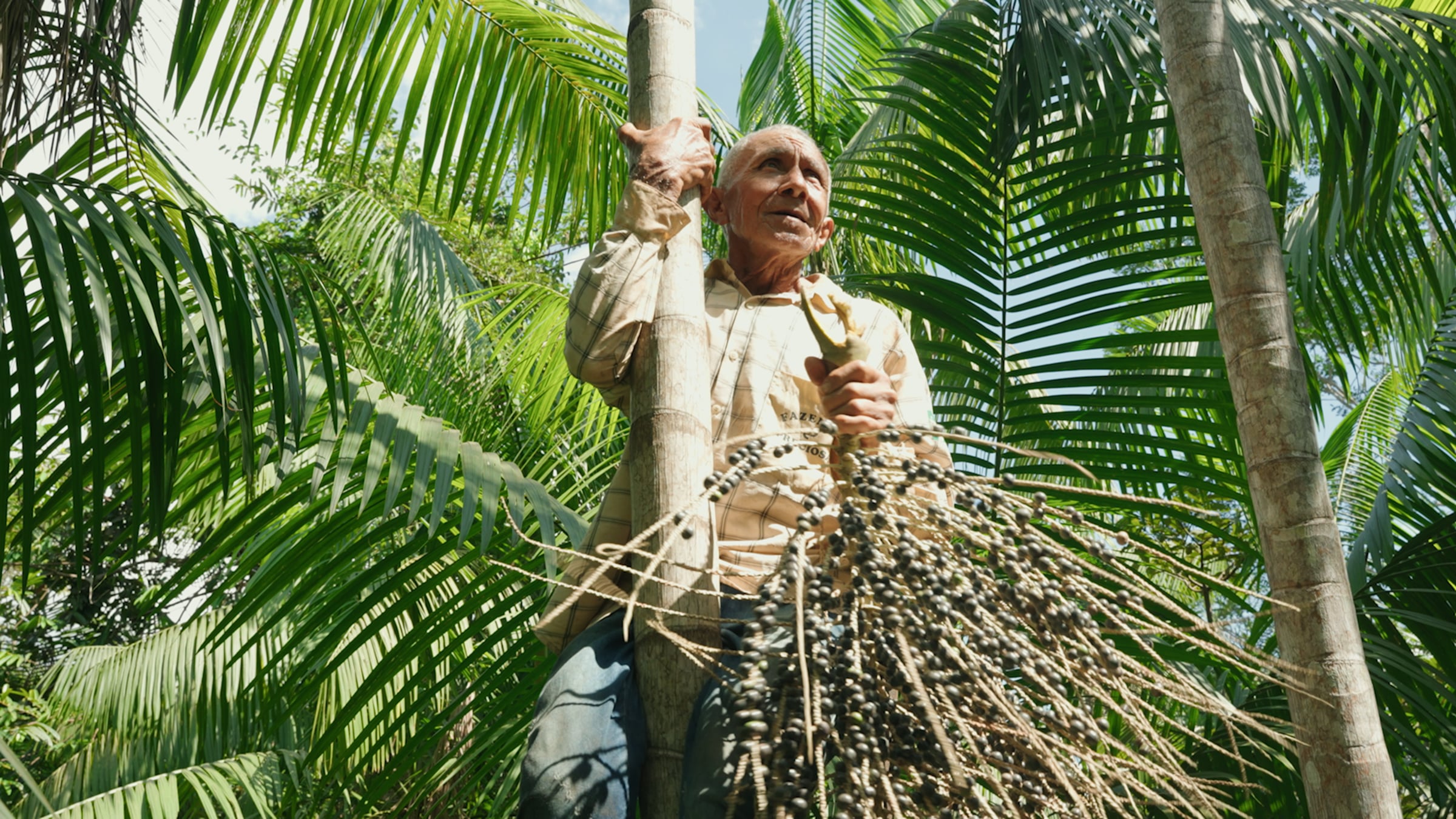 PEREGRINE FILMS / VIMEO
Meet the people whose lives and livelihoods revolve around açaí in Pará. This documentary follows the fruit’s place in everyday life as a local staple reaches a global market.
Published by Peregrine Films. Camera and editing: Boromir Bogumil. Original score: Santiago Burelli.
Watch the original on Vimeo Read the filmmaker’s introduction BUSINESS INSIDER / YOUTUBE / 2022
Field reporting follows açaí from the palms to processors and overseas consumers, looking closely at the work and economics behind its popularity.
Business Insider, True Cost, 2022. Includes dangerous working conditions and child labour.
Watch the original on YouTube JUSTYNA KABALA / VIMEO / EXCERPT
A community-directed perspective on peconheiros—açaí pickers—and their relationship with the forest, made with Boa Vista do Acará and its organic producers’ association, APOBV.
Co-directors and interviewees: Leandro Teles e Teles and Jose Maria Gomes. Camera, sound and editing: Justyna Kabala. Filmed 2019–2020.
Watch the original on VimeoFilms shared through their creators’ official players. All film and image credits belong to the publishers named above.
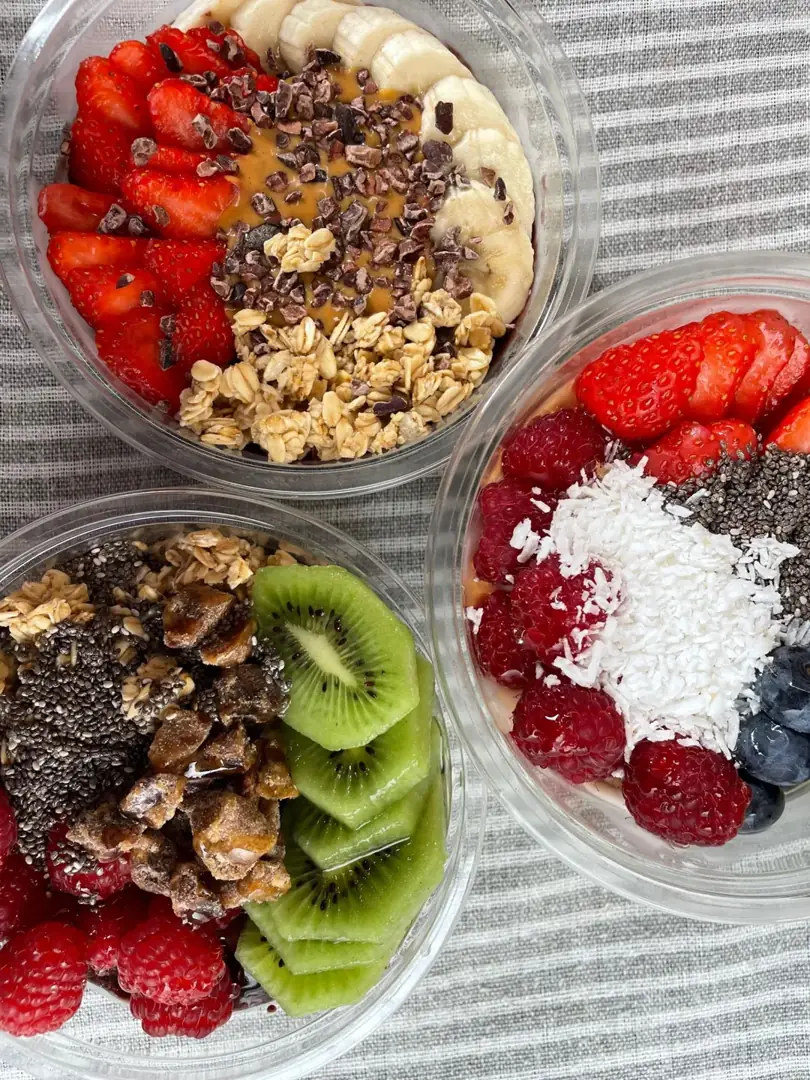
AT OUR END OF THE JOURNEY
That’s the fruit. Now meet our combinations: fresh toppings, different textures, and a little purple at the heart of it all.
Explore the full menu Put your own twist on a bowl06 / FOLLOW THE REFERENCES
Sources reviewed 2 October 2026. Research, community accounts, reporting and commercial process descriptions are labelled below so you can see where each part of the story comes from.
Açaí: background, human evidence and safety. Public health overview; background on the fruit and its research.
Read the evidence overviewBackground and credits for Açaí Nativo: Fruto da Amazônia. A research institute’s community-focused film.
Meet the film and its communitiesAçaí in the Amazon: diversity of tastes at the core of the coexistence of short and global chains. Research in Économie rurale, issue 367. French text with English abstract.
Read the research (PDF)Original documentary reporting on harvesting, trade, working conditions and environmental pressures.
Watch the reportingA producer’s description of pulping, pasteurising, freezing and sea shipment to Europe. An example of its process; not verification of our supplier.
Read the factory-to-freezer accountExamples of refrigerated sea freight and smaller air shipments. Transport varies by supplier and order.
Read the export informationFrozen packs, unsweetened options and scoopable formats. Used to illustrate product differences, not to substantiate health claims.
See the product formatsPhytochemical and nutrient composition of the freeze-dried Amazonian palm berry. Analysis of a particular pulp/skin powder, not our prepared bowls.
Read the composition studyGeneral guidance on fibre, food variety and digestion. It does not establish the fibre content of our recipes.
Read the dietary guidanceA small acute, randomised crossover study of an açaí smoothie and vascular-function markers in 23 men.
Read the study abstractCommunity film excerpt and original production credits, published by filmmaker Justyna Kabala.
Visit the film’s original pageThe publisher’s English-subtitled version and the filmmaker’s account of this documentary about açaí and life in Pará.
Watch the English-subtitled version Read the filmmaker’s introduction